Date
Author
Celo Core Co.
Recaps & Milestones
Celo-Mercy Corps Ventures Pilot Highlights How DeFi on Celo Empowers Farmers in Kenya

Reading time
7 minutes
Share
Copy link
Decentralized Finance (DeFi) offers people everywhere new pathways to financial empowerment. But the overcollateralized lending models most common in DeFi today do not address the financial needs of those who could benefit from DeFi the most. At the Celo Foundation, we believe that DeFi’s growth and improved accessibility necessary for people to build wealth depends upon new lending models.
In support of that belief, we partnered with Mercy Corps Ventures to leverage Moola Market, a borrower and lending protocol built on Celo, and Kotani Pay, an on/off ramp provider in Africa, to launch an employer-based stablecoin lending model in Nanyuki, Kenya, in April. This first-of-its kind pilot explored a scalable solution for microloans that leverages the power of mobile-first DeFi on Celo.
The employer for this pilot, Cinch Markets, is an agriculture company that leases farmland from smallholder farmers and hires farmers to grow high-value crops at scale. Mercy Corps Ventures backed Cinch’s participation in the pilot, in addition to helping us design the model.
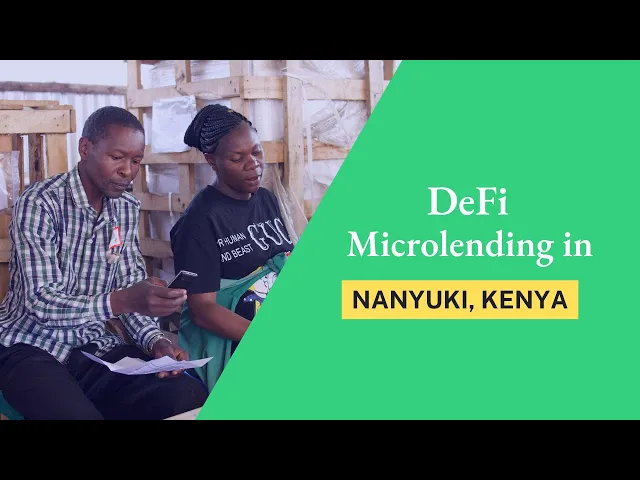
Watch this video for an in-depth view of the pilot:
The repayment period of the program still has a couple of months to go, but it already demonstrates the potential of DeFi to positively impact and empower low-income and rural groups. Loans valued at approximately USD$10K were deployed to 68 farmers employed by Cinch in rural Kenya, all through DeFi and mobile phone text messaging. Here’s why and how it was done.

Pilot participants learn about the terms and conditions of the loan program at an orientation hosted by Cinch and Celo.
Financial Tools for the Underserved and Excluded
In emerging markets, it can be impossible for low income individuals to access credit in traditional ways due to limited capital availability from financial institutions and lack of credit history. As a result, some are forced to turn to alternative solutions, such as savings and credit groups (SACCOs in Kenya), microfinance institutions, fintechs, and loan sharks, all of which charge high interest rates. Others turn to networks in their community that allow them to leverage their social capital. Trusted workers, for example, go to employers to borrow money collateralized against their wages. If the money isn’t paid back by a certain date, the loan principal, plus interest, is garnished from wages.
The solutions aren’t perfect.
Current employer-based lending models face two key challenges. First, employers are burdened with managing the administrative tasks — determining loan terms and tracking loan payments. Second, borrowers still face high interest rates because employer-based loans are tied to local interest rates and the capital available in the area — employers do not have access to transparent global markets.
We, along with our partners, are determined to solve these problems through our unique model.

Will Le, Head of Research and Innovation at the Celo Foundation, discusses the loan repayment schedule with a pilot participant.
The Pilot: Delivering Stablecoin Loans Using DeFi
To explore how mobile-first DeFi built on Celo could offer a better solution for employer-based lending, the Celo Foundation partnered with Cinch to launch a three-month stablecoin loan pilot in Nanyuki, Kenya. The loans in this pilot were for farmers and landowners employed by Cinch.
Overcoming the Challenges
Our hypothesis was simple: Employer-based lending using DeFi apps built on Celo offers better interest rates, features faster loan delivery, and reduces administrative overhead.
In early April, we set out to prove the model. The Cinch team generated awareness among their employees in Nanyuki to gauge interest and identify eligible participants. Eligibility was based on a sustained work history with Cinch, as well as anticipated continued employment. From those eligible, Cinch selected 100 employees.
Pilot participants faced two key obstacles to accessing their DeFi loans. First, they struggled with poor internet connectivity — many own feature phones rather than smartphones. Second, they needed to be able to transfer their stablecoin loans to M-pesa, the largest mobile money service in Kenya. Celo technology and Kotani Pay solved both problems.
Using Kotani Pay’s USSD system, borrowers were able to interact with the Celo blockchain to access their loans through any type of mobile phone, including feature phones, via a series of text messages rather than through a smartphone application. Furthermore, Kotani Pay completed KYC (know your customer) requirements for the pilot participants using info provided by those employees, and created individual Celo blockchain addresses that linked to each participant’s mobile phone number and connected to their M-pesa accounts.
Distributing the Loans
Loan distributions were handled through the Moola Market DeFi protocol, which requires every stablecoin loan to be overcollateralized. Cinch deposited Celo’s cEUR stablecoin as collateral into Moola, and then delegated it to the participants, which meant that they didn’t have to deposit any collateral themselves. Employees were then able to leverage the delegated collateral to borrow cUSD at Moola’s low interest rates. Each participant was delegated enough collateral to take on a loan equal to 4 times their monthly salary.
Importantly, in addition to the participants benefitting from the model, Cinch benefits by earning variable interest on its collateral deposit based off of the stablecoin deposit rate on Moola Market. That rate is calculated according to the total borrowing demand for stablecoins on Moola and the available liquidity in the protocol.

Pilot participants request loan amounts in their local currency, the Kenyan shilling, using their mobile phones.
Using the Kotani Pay system on their mobile phones, Cinch employees then submitted a series of text messages to request their loan in the local currency, the Kenyan shilling. Within one minute of making a request, money was deposited into their M-pesa accounts. By borrowing from Moola, participants locked in an 8% annual loan interest rate.
Pilot Benefits So Far
While the loan distribution part of the pilot is complete, we look forward to gathering the final stats on all aspects in a few months. What we know now is that 68 Cinch employees took on loans amounting to $9,697 through Moola Market — at a competitive annual interest rate of 8%.* Interest rates of loan alternatives in Nanyuki were well above 20% at the time. “This is the best loan group I have ever seen,” said pilot participant Ephraim Wachira. “It is the first one I have seen with such a low interest rate.”
Because each participant was taught how to use a loan calculator, they were able to enter their monthly salary, and then tweak the desired loan amount to assure a net income that would allow them to continue to cover their monthly expenses. Some participants recognized that if the loan tenure was increased, the amount repaid per month reduced, enabling them to take out a larger loan yet receive the same net monthly income. “When I calculated my salary, I still have a high salary left,” said participant James Nyere. “If we had more time, I would have taken a bigger loan.”
Additionally, 97% of Cinch employees were able to successfully access their loans through the Kotani Pay system; however, two employees faced issues due to lack of phone credit necessary to access the network and their M-pesa accounts.
The pilot also offered convenience. Participants were able to obtain a loan without traveling to a bank, which during the rainy season could save hours of travel time.
Cinch employees have told us that their individual loans, which ranged from $150 to $250, are being used for many different purposes, including to pay for the education of their children. A common denominator amongst all borrowers was that the low interest rates make it possible for them to invest in their future. “I am not only going to put the money in school fees,” said pilot participant James Mwangi, “I will invest and get a [piece of] land that can appreciate with time. I can plant wheat.”
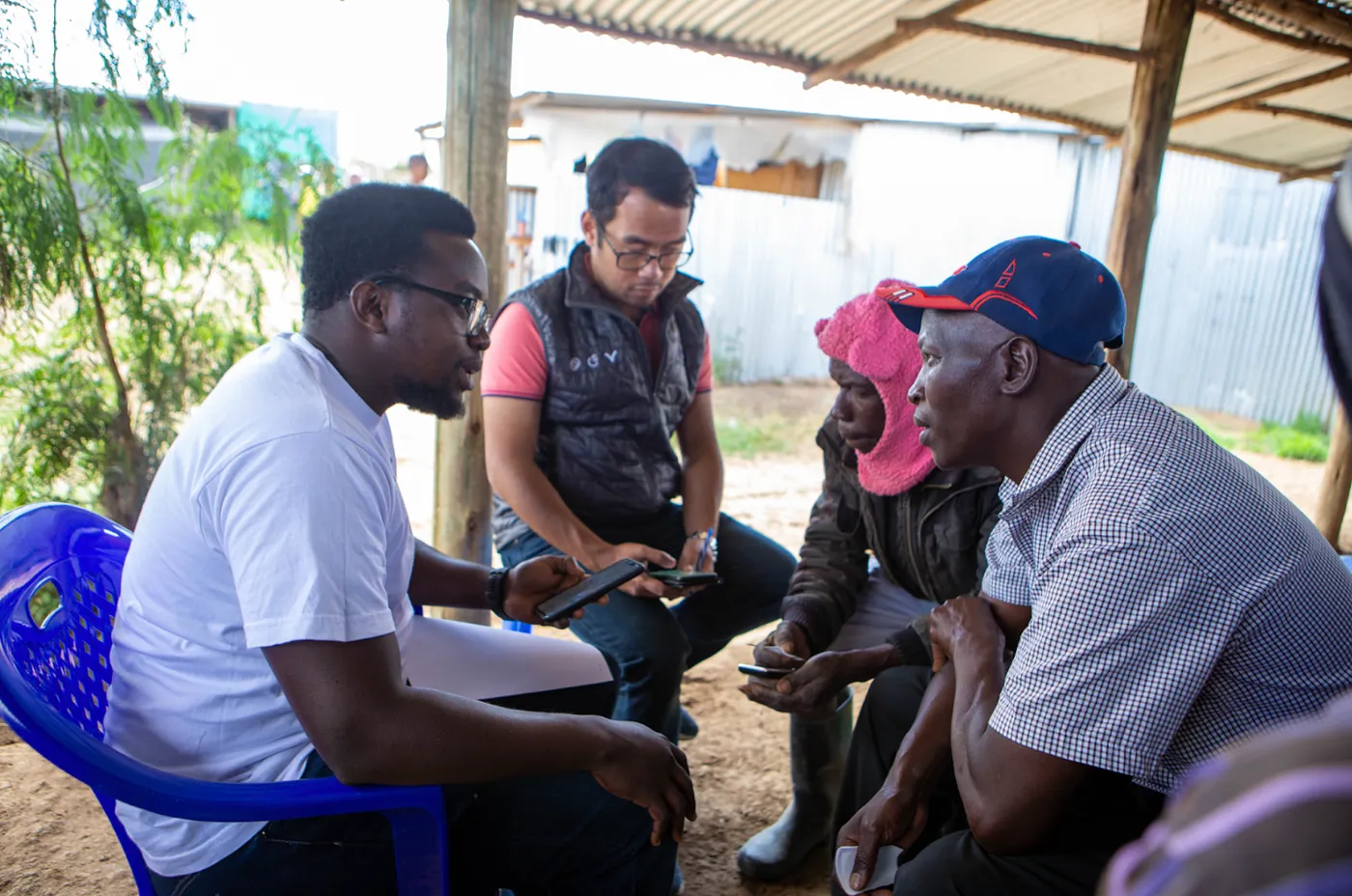
Pilot participants learn how to off-ramp their stablecoin loans into their M-pesa accounts.
Building the Future of DeFi
Mobile-based DeFi has immense potential to address real needs and empower billions of people across the globe. We at the Celo Foundation believe that DeFi solutions, such as this employer-based lending model, can usher in a new paradigm of financial services at affordable rates to communities everywhere. DeFi can eliminate the centralized middleman, giving users better control over their assets. Plus, developers can continue to build upon DeFi infrastructures to suit their local needs. This is financial empowerment at its best — creating financial tools that people themselves own and control.
We will continue to collect data on this pilot through July 2022. Expect a comprehensive impact report from Mercy Corps Ventures in the fall. In the meantime, read Mercy Corps Venture’s recently published blog post about the pilot launch, learn more about how DeFi for the People works to build real world DeFi solutions, and follow us at Celo.org as we build a financial system to create the conditions of prosperity for all.
* Thirty-two employees from the original list of 100 chose to not take on a loan after reviewing the repayment schedule.
DeFi
Funding News
Initiatives
Latest


